
Medically Reviewed
Last updated: 29/04/2026
Sleep disorders are conditions that affect the quality, duration, and timing of sleep. Common examples include insomnia, restless legs syndrome, narcolepsy, and sleep apnea. These conditions can affect both mental and physical health. Treatment options are available to improve sleep and overall functioning.
Overview
Sleep disorders are conditions that interfere with the ability to obtain adequate and restorative sleep, as well as normal daytime alertness. More than 80 types of sleep disorders have been identified. They may affect:
- Sleep quality
- Sleep timing
- Sleep duration
Occasional sleep difficulty is common. A sleep disorder may be suspected when:
- Sleep problems occur frequently
- Daytime fatigue persists despite adequate time in bed
- Daily functioning is affected
Categories of sleep disorders
Sleep disorders are generally classified based on symptoms and mechanisms of disease. Major categories include:
- Insomnia: difficulty falling asleep or staying asleep
- Sleep-related breathing disorders: abnormal breathing during sleep
- Central disorders of hypersomnolence: excessive daytime sleepiness
- Circadian rhythm sleep-wake disorders: disruption of the internal biological clock
- Parasomnias: abnormal behaviors during sleep
- Sleep-related movement disorders: movements or sensations that disrupt sleep
Common types of sleep disorders
Common conditions include:
- Chronic insomnia: persistent difficulty initiating or maintaining sleep
- Obstructive sleep apnea: repeated pauses in breathing during sleep
- Restless legs syndrome: uncomfortable sensations in the legs with an urge to move
- Narcolepsy: inability to regulate sleep-wake cycles
- Shift work sleep disorder: sleep disturbance due to work schedules
- Delayed sleep phase syndrome: delayed sleep onset and difficulty waking at appropriate times
- REM sleep behavior disorder: acting out dreams during sleep
How much sleep is needed
Sleep is essential for normal body and brain function. Adults generally require 7 to 9 hours of sleep per night. Sleep needs vary by age, with children and adolescents requiring more sleep.
How common are sleep disorders
Sleep disorders are widely prevalent and affect a large proportion of the population. Many individuals also experience insufficient sleep even without a diagnosed sleep disorder.
Symptoms and Causes
Symptoms
Symptoms vary depending on the type of sleep disorder and may include:
- Difficulty falling asleep (taking more than 30 minutes regularly)
- Frequent nighttime awakenings
- Loud snoring or breathing interruptions during sleep
- Urge to move the legs during rest
- Temporary inability to move upon waking
Daytime symptoms may include:
- Excessive sleepiness
- Frequent naps or unintended sleep episodes
- Difficulty concentrating
- Mood changes, such as irritability
- Reduced performance at work or study
- Increased risk of accidents
Causes
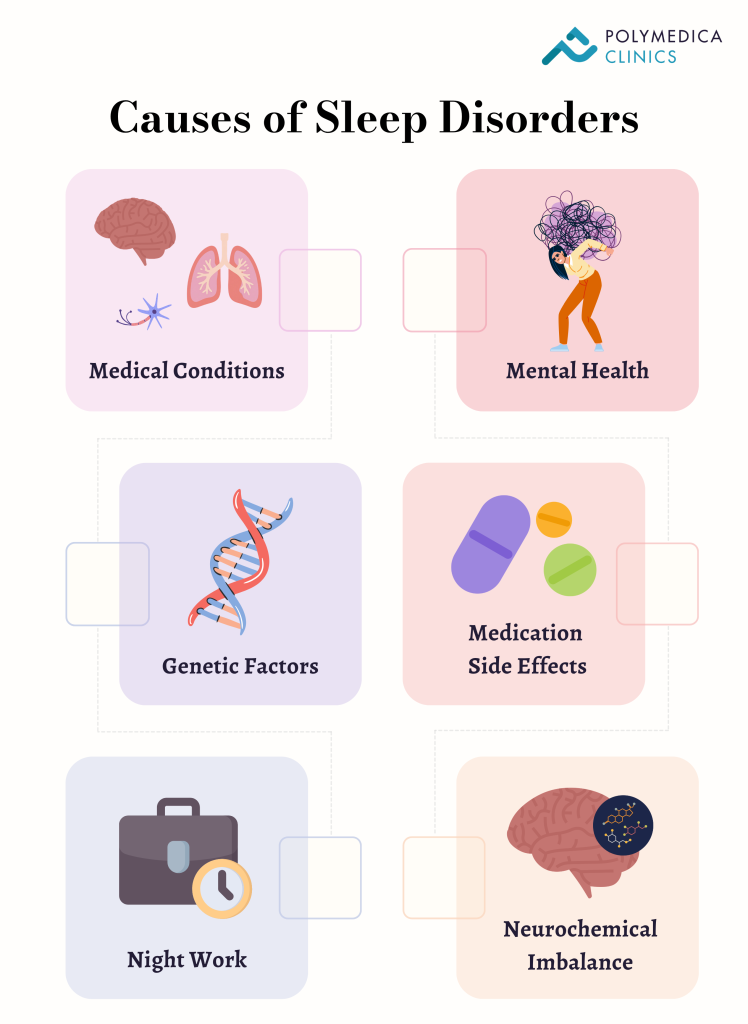
Sleep disorders may result from disruption of the sleep-wake cycle due to:
- Medical conditions such as heart disease, asthma, chronic pain, or neurological disorders
- Mental health conditions such as depression or anxiety
- Genetic factors
- Medication side effects
- Night or shift work
- Low levels of certain chemicals or minerals in the brain
- Unknown causes
Risk factors
Risk may be higher in individuals who:
- Have chronic medical conditions
- Experience psychological stress
- Work night or rotating shifts
- Have a family history of sleep disorders
Sleep disorders are also more commonly reported in females and in older adults.
Effects of poor sleep
Inadequate sleep may lead to:
- Difficulty learning, memory impairment, and poor decision-making
- Irritability and mood changes
- Slower reaction times and increased accidents
Long-term sleep disruption may contribute to:
- Depression
- Obesity
- Type 2 diabetes
- Cardiovascular disease
- Dementia
Some sleep disorders may carry serious health risks if untreated.
Diagnosis and Evaluation
How sleep disorders are evaluated
Diagnosis begins with a psychiatrist specialized in the management of sleep disorders, particularly in cases of insomnia related to stress, anxiety, or mood symptoms. Depending on the condition, the patient may be referred to other specialties, such as:
- Snoring, breathing pauses, gasping, or choking during sleep is evaluated in pulmonology or ear, nose, and throat (ENT) medicine
- Leg discomfort at rest with an urge to move, or involuntary limb movements during sleep (such as in restless legs syndrome or periodic limb movement disorder), is evaluated in neurology
The evaluating doctor reviews medical history and sleep patterns.
Diagnostic tools
Investigations may include:
- Blood tests or imaging when indicated
- Sleep diary to record sleep patterns
- Wearable devices to monitor sleep-wake cycles
If further evaluation is required, referral may be made to a sleep medicine service. A sleep study (polysomnography) may be performed to measure brain activity and physiological changes during sleep.
When to seek care
Persistent sleep problems or daytime sleepiness should be evaluated early.
A psychiatrist experienced in sleep disorders can assess symptoms related to insomnia, stress, anxiety, or mood disturbances, initiate treatment when appropriate, and coordinate referral to other medical fields such as pulmonology, neurology, or ENT when further evaluation is needed.
Management and treatment
Treatment depends on the type and severity of the sleep disorder and may include:
- Sleep hygiene and behavioral changes
- Cognitive behavioral therapy (CBT)
- Medications or supplements such as melatonin or sleep aids
- Adjustment of medications that affect sleep
- Continuous positive airway pressure (CPAP) therapy for sleep apnea
- Light therapy in circadian rhythm disorders
Treatment plans are individualized, and potential side effects are considered before initiation.
Medications used in specific conditions:
- Insomnia: melatonin, zolpidem, zaleplon, eszopiclone, ramelteon, suvorexant, lemborexant, doxepin
- Restless legs syndrome: gabapentin, pregabalin
- Narcolepsy: modafinil, armodafinil, pitolisant, sodium oxybate, solriamfetol
Sleep hygiene
How to fall asleep faster and improve sleep quality
Creating a comfortable sleep environment
Keep the bedroom cool, quiet, and dark. If noise affects sleep, use white noise or earplugs. If light interferes with sleep, a sleep mask or blackout curtains may help.
Reducing stress before bedtime
Reducing stress before sleep can improve sleep quality. Writing a to-do list earlier in the evening may help reduce overthinking at night. Avoid negative expectations about sleep, such as worrying excessively about the next day.
Using the bed only for sleep
The bed should be used only for sleep and intimate relations. Avoid watching television, using a phone, eating, or working in bed, as this can weaken the brain’s association between bed and sleep.
Establishing a consistent sleep routine
A regular bedtime routine can improve sleep quality. This may include a warm bath, reading, listening to calming music, or relaxation techniques. Waking up at the same time every day, including weekends, helps regulate the sleep-wake cycle.
Avoiding clock-watching
Checking the clock during the night can increase anxiety and make falling asleep more difficult. If sleep does not occur within about 20 minutes, leave the bedroom and do a quiet, non-screen activity until sleepiness returns.
Regular physical activity
Regular exercise supports better sleep. However, intense physical activity should be avoided within four hours of bedtime in individuals with sleep difficulties.
Outlook
Sleep disorders may significantly affect daily life, including work performance, concentration, and safety. With appropriate management, many patients experience substantial improvement in symptoms.
Some conditions resolve with short-term treatment, while others require long-term management.
Prevention
Not all sleep disorders can be prevented, but risk may be reduced by maintaining good sleep habits.
Avoid before bedtime:
- Caffeine
- Tobacco
- Late naps
- Heavy meals
- Chocolate
This article is for informational purposes only and does not constitute a diagnosis or treatment, nor does it substitute professional medical advice.