
Medically Reviewed
Last updated: 12/06/2026
A migraine is far more than a typical headache. It can cause severe, pulsating pain, often affecting one side of the head, and may be intense enough to keep a person in bed for several days. Symptoms can be triggered or worsened by movement, bright lights, loud sounds, and other factors. Additional symptoms may include fatigue, nausea, irritability, and visual disturbances. Neurologists can help people manage migraines and reduce their impact on daily life.
What is a migraine?
A migraine is a severe headache disorder characterized by throbbing or pulsing pain, usually on one side of the head. The headache phase of a migraine usually lasts at least four hours but may continue for several days. Symptoms often become worse with:
- Physical exertion
- Bright light exposure
- Loud sounds
- Strong smells
Migraines can significantly disrupt daily activities and interfere with personal, social, and professional responsibilities. Treatment options are available to help control symptoms.
Types of migraines
The most common migraine categories are:
- Migraine with aura (classic migraine)
- Migraine without aura (common migraine)
An aura is a stage that may occur before the headache begins.
Other migraine types include:
- Abdominal migraine (seen in children)
- Chronic migraine
- Hemiplegic migraine
- Menstrual migraine
- Silent migraine (migraine without headache)
- Retinal or ocular migraine
- Status migrainosus
How common are migraines?
Migraines are widespread. Research indicates that approximately 20% of people in Egypt experience them.
Symptoms and Causes
The four migraine phases
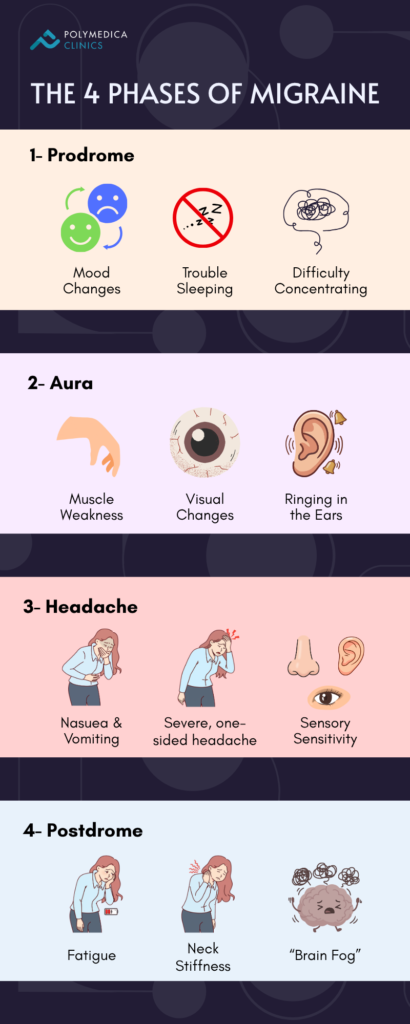
Migraine symptoms typically occur in four stages, with the headache phase being the most recognizable.
1. Prodrome
This initial phase can begin up to 24 hours before the headache develops.
2. Aura
An aura consists of sensory, speech, or motor symptoms that serve as a warning sign. It may last anywhere from five minutes to one hour and can occur simultaneously with the headache.
3. Headache
The headache stage generally lasts between four and 72 hours.
4. Postdrome
The fourth and final phase of a migraine may continue for several hours or up to 48 hours.
Completing all four stages may take between eight and 72 hours.
Migraine symptoms by phase
Prodrome symptoms
- Mood changes
- Difficulty concentrating
- Sleep disturbances
- Fatigue
- Nausea
- Increased appetite and thirst
- Frequent urination
Aura symptoms
- Muscle weakness
- Changes in vision
- Ringing in the ears (tinnitus)
- Increased sensitivity to touch
- Numbness or tingling
- Difficulty speaking or focusing
Headache symptoms
The pain usually increases gradually and may affect one side or both sides of the head. Additional symptoms may include:
- Nausea
- Vomiting
- Sensitivity to light
- Sensitivity to sound
- Sensitivity to odors
Postdrome symptoms
- Fatigue
- Neck stiffness
- Sensitivity to light and sound
- Trouble concentrating
- Nausea
- Dizziness
What does a migraine feel like?
Migraine pain may be described as:
- Throbbing
- Pulsing
- Pounding
- Dull
The experience differs from person to person and may range from mild to severe. Pain can begin on one side of the head and move to the other. It may also affect the eyes, temples, face, sinuses, jaw, or neck.
How often do migraines occur?
Migraine frequency varies greatly. Some people experience one migraine each year, while others may have one every week. Most individuals average two to four migraines per month. They are most likely to occur in the morning. Although migraines are often unpredictable, some people notice patterns, such as attacks occurring before menstruation or during stressful periods.
What causes migraines?
The exact cause remains unclear, although research suggests that genetics contribute to migraine development.
During a headache, certain nerves associated with blood vessels send pain signals to the brain. This process releases inflammatory substances into the nerves and blood vessels of the head. Researchers do not yet know why this response occurs.
Common migraine triggers
Triggers are factors that can initiate symptoms. Frequent triggers include:
- Stress
- Hormonal fluctuations
- Certain medications
- Changes in sleep patterns
- Weather changes
- Excessive physical exertion
- Caffeine or tobacco use
- Skipping meals
- Exposure to bright lights, loud sounds, or strong odors
Neurologists often recommend keeping a migraine diary to identify personal triggers.
Foods that may trigger migraines
Some individuals are sensitive to chemicals or preservatives in certain foods, making migraines more likely, especially when other triggers are present.
Common food-related triggers include:
- Aged cheeses
- Chocolate
- Food additives such as MSG and nitrates
- Processed or cured meats, including hot dogs and pepperoni
- Fermented or pickled foods
Are migraines hereditary?
Yes. Migraines frequently occur within biological families. Up to 80% of people with migraines have a first-degree biological relative who also has the condition.
Risk factors
Anyone can experience migraines, from childhood through adulthood. Women are affected more often than men.
Additional risk factors include:
- A biological family history of migraines
- Depression
- Anxiety
- Sleep disorders
- Epilepsy
- Regular tobacco use
Diagnosis and Testing
How are migraines diagnosed?
Neurologists diagnose migraines through a physical examination, neurological examination, and review of medical and family history.
Questions may include:
- What symptoms are you experiencing?
- How would you describe your headache and where is it located?
- How severe are your symptoms?
- How long did the symptoms last?
- Did anything improve or worsen the headache?
Additional testing may include blood work, CT scans, MRIs, or an electroencephalogram (EEG) to rule out other conditions.
Management and Treatment
How are migraines treated?
There is currently no cure for migraines. However, neurologists can help manage symptoms through:
- Medications
- Trigger avoidance
- Alternative therapies
Medications for migraines
Two main medication categories are available:
Medications that stop migraines
These are taken at the first sign of symptoms and help reduce or stop pain, nausea, sensitivity, and related symptoms.
Common medications used to treat acute migraine attacks include:
- Triptans (such as sumatriptan)
- Anti-nausea medications such as metoclopramide
- Pain relievers and anti-inflammatory medications when appropriate
Medications that prevent migraines
These are usually prescribed for people with frequent attacks or symptoms that significantly disrupt daily life. They reduce both frequency and severity.
Common preventive treatments include:
- Antiseizure medications (valproic acid, topiramate)
- Beta-blockers (propranolol, atenolol)
- Calcium channel blockers (verapamil)
- Monoclonal antibodies (erenumab, fremanezumab, galcanezumab; newer treatments with limited routine availability in Egypt)
- Tricyclic antidepressants (amitriptyline, nortriptyline)
- Serotonin and norepinephrine reuptake inhibitors (venlafaxine, duloxetine)
Treatment decisions should be made with a neurologist, and all medication instructions should be followed carefully.
Over-the-counter treatments
People with mild to moderate symptoms may benefit from over-the-counter medications containing:
- Ibuprofen
- Aspirin
- Acetaminophen
- Naproxen
- Caffeine
Overuse of these medications can lead to rebound headaches or dependence. Anyone using them more than two or three times weekly should consult a neurologist.
Avoiding triggers
Neurologists may recommend keeping a migraine journal to record:
- When a migraine occurs
- Symptoms experienced
- Duration
- Foods consumed
- Activities performed
Smartphone applications can also help track migraine patterns.
Once triggers are identified, steps can be taken to avoid them when possible. For example, stress-management strategies may help if stress is a trigger, while regular meal schedules may help if skipped meals contribute to attacks.
Alternative therapies
Some people find additional relief through:
- Riboflavin (vitamin B2)
- Magnesium
- Coenzyme Q10
- Acupuncture
- Botulinum toxin type A (Botox®) injections for chronic migraine under specialist care
A neurologist should be consulted before starting alternative treatments.
Migraine treatment during pregnancy
People who are pregnant or planning pregnancy should discuss migraines with their neurologist. Certain migraine medications may affect fetal development and should be avoided when appropriate.
Alternative treatments, including acetaminophen-based pain relief, may be recommended.
Managing a migraine attack
Helpful strategies during an attack include:
- Resting in a dark, quiet, cool room
- Applying a cold or warm compress to the forehead or neck
- Massaging the scalp
- Gently applying circular pressure to the temples
- Practicing relaxation or meditation
Outlook
Migraines vary from person to person. Although they are temporary, they often recur throughout life. There is currently no cure, but treatment can help reduce the severity and shorten attacks. Finding the most effective treatment may take time, and symptom changes should be reported to a healthcare provider.
Prevention
Can migraines be prevented?
Not all migraines can be prevented. However, preventive medications can help reduce how often attacks occur and how severe they become. Learning to recognize and avoid triggers, with guidance from a healthcare provider, may also help decrease migraine frequency and intensity.
This article is for informational purposes only and does not constitute a diagnosis or treatment, nor does it substitute professional medical advice.