
Medically Reviewed
Last updated: 08/12/2025
What is nutrition?
Nutrition is the process of eating and absorbing food that your body needs for nourishment. It involves breaking down food into nutrients. Nutrients are chemical substances your body needs to function. But this essential process does much more than that. Research shows that proper nutrition can lower your risk for diabetes, heart disease and stroke. It supports the healing process when you are recovering from surgery, a cold or a case of stomach flu. Experts are also exploring how nutrition may influence mental health. Understanding how nutrition works can help you feel confident that you are making the most of what you eat.
What are nutrients?
There are six major classes of nutrients. Eating well is a balancing act that combines all six. The nutrients in the foods you eat benefit your body in different ways. Macronutrients provide energy and keep your body working. Micronutrients are vitamins and minerals that support your metabolism along with many other functions. Water completes the list of essential nutrients because it helps transport nutrients and oxygen to your cells.
Macronutrients
If your body was a building, macronutrients would be the foundation. They are your primary source of energy. Macronutrients include:
Carbohydrates which include sugars, starches and fiber. They are the main energy source your body uses.
Lipids which are found in fats, oils, meat, dairy and other foods. They store energy and support fat digestion along with many other roles.
Proteins which help build and repair muscles and regulate hormones.
Micronutrients
Micronutrients are essential vitamins and minerals. You need them in smaller amounts than macronutrients, but they are still very important.
Vitamins
Vitamins come from plants and animals. Food is the main source of most vitamins, although some people take a multivitamin to ensure they receive what they need. Essential vitamins include:
- Vitamin A supports the immune system, metabolism and vision.
- Vitamins B1 through B12 help convert food into energy and support blood vessels, the brain, the immune system and the nervous system.
- Vitamin C helps your body grow tissue, heal wounds and strengthen the immune system.
- Vitamin D works with calcium to maintain strong bones and also supports brain and immune health.
- Vitamin E protects your cells and supports the health of red blood cells, white blood cells and platelets along with the brain, eyes and skin.
- Vitamin K helps blood clot properly and prevents excessive bleeding.
Minerals
Minerals enter foods naturally when plants absorb them from the soil or animals eat those plants. Essential minerals include:
- Calcium for strong bones, heart health, muscle function and nerve function.
- Chromium for processing carbohydrates and fats.
- Copper for brain development and immune and nervous system health.
- Fluoride for strong bones and the prevention of tooth decay.
- Iodine for thyroid health and brain development.
- Iron for producing hemoglobin in red blood cells.
- Magnesium for protein production and converting food into energy.
- Manganese for protecting cells and supporting energy production.
- Phosphorus for strong bones and teeth, producing energy and repairing cells.
- Potassium for supporting muscles and helping prevent high blood pressure.
- Selenium for thyroid function and reproductive health.
- Sodium for nutrient absorption and muscle and nerve function.
- Zinc for immune support and vision protection.
Food groups
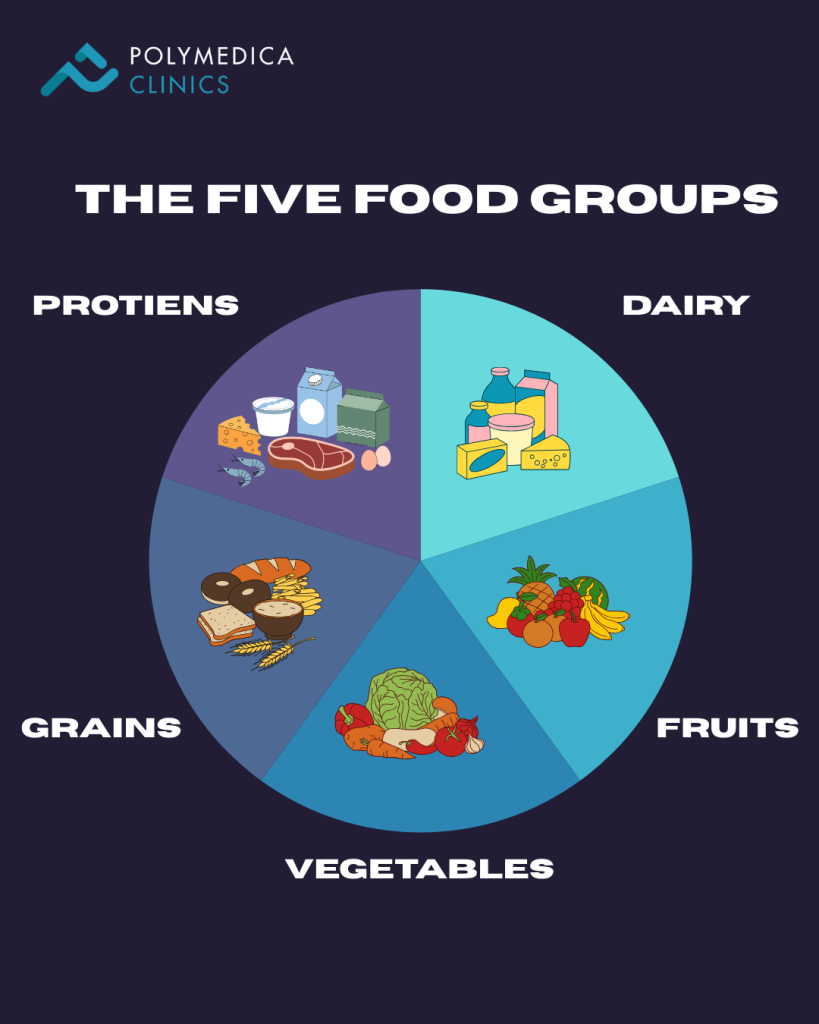
All of these nutrients come together in the five food groups that form balanced meals:
- Vegetables
- Dairy
- Fruit
- Grains
- Protein
How nutrition needs change
Getting nutrition right is a balancing act that shifts throughout your lifetime. Babies, children, adults and older adults all have different nutritional needs.
Nutrition for kids of all ages
Breast milk or formula meets most nutritional needs during the first six months of life. At six months, solid foods can be added. Because choosing the right foods can be challenging, parents often consult a pediatrician when introducing solids. As children grow, meals that include the five food groups usually provide the right combination of macronutrients and micronutrients.
Nutrition for adults
The five food groups continue to support adult nutrition. However, males and females often need different nutrient amounts. Females typically need more iron because of blood loss during menstruation. Pregnancy and childbirth can also increase the risk of iron deficiency anemia. Males often need slightly more vitamin B5, which supports muscle mass. As people age, appetite may decline due to medications or medical conditions. Adults over 65 may benefit from eating foods that boost calcium and vitamin D for strong bones.
How Diet Influences Overall Health
A diet that lacks balance can lead to nutrient shortages over time. Poor eating habits may cause low energy, weakened immunity or difficulty maintaining a healthy weight. When nutrient deficiencies become more severe, they can contribute to or worsen long term health problems. In addition to everyday diet challenges, some medical conditions significantly affect how your body uses or absorbs nutrients. Understanding these situations can help highlight why nutrition is important at every level of health.
Medical conditions that affect nutrition
There are medical conditions that affect nutrition regardless of age. For example, cancer cachexia occurs when cancer speeds up metabolism so the body uses more energy than it receives from food. Depression can reduce interest in planning and eating nutritious meals. Dysphagia, which is difficulty swallowing, can limit the foods you can eat and increase the risk of missing essential nutrients. Malabsorption syndromes prevent the body from absorbing nutrients effectively. These conditions can lead to malnutrition.
Macronutrient undernutrition occurs when you do not get enough protein, carbohydrates or fats. Your body responds by conserving energy, slowing organ function or breaking down tissue.
Micronutrient undernutrition occurs when you have a serious vitamin or mineral deficiency. A common example is iron deficiency anemia.
Frequently Asked Questions About Nutrition
What is the difference between calories and nutrients?
Calories measure how much energy food provides. Nutrients are the substances your body needs to function, grow and repair itself. Different nutrients contain different numbers of calories. For example, lipids contain more calories than carbohydrates.
Who can help with nutrition questions?
A clinical nutritionist can help you understand your nutritional needs, explain how specific nutrients support your health and show you how to include them in your diet.
This article is for informational purposes only and does not constitute a diagnosis or treatment, nor does it substitute professional medical advice.