
Medically Reviewed
Last updated: 04/05/2026
Premenstrual syndrome (PMS) refers to a group of physical and emotional symptoms that occur before your period. These symptoms may include physical issues such as bloating or breast tenderness, emotional changes like irritability or sadness, or both. In some cases, symptoms can interfere with daily life, though lifestyle changes and over-the-counter medications often help manage them.
Premenstrual dysphoric disorder (PMDD) is a more severe form of PMS. While it includes many of the same symptoms, PMDD is characterized by more intense emotional and mood-related effects that can significantly disrupt daily functioning.
Overview
What is PMS?
PMS describes a range of physical and emotional symptoms that typically begin one to two weeks before menstruation. Many women experience at least one PMS symptom. These symptoms often signal that a period is approaching and usually go away shortly after menstruation begins. They tend to return in a similar pattern each cycle.
About 80% of all women experience at least one PMS symptom, and around 20% experience symptoms severe enough to impact their daily lives.
What is PMDD?
PMDD is a more serious and less common condition than PMS. It also occurs in the one to two weeks before a period but involves more intense emotional symptoms, such as severe irritability, anxiety, or depression. Although symptoms improve after menstruation starts, they can be disruptive while present.
PMDD affects up to 10% of women.
Symptoms
PMS Symptoms
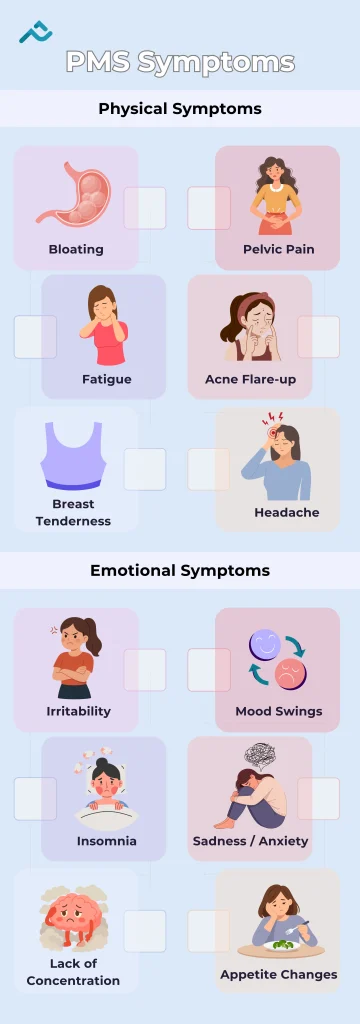
Physical symptoms
Common physical symptoms include:
- Bloating or feeling gassy
- Pelvic pain
- Fatigue
- Acne flare-ups
- Breast tenderness
- Headaches
- Diarrhea or constipation
Emotional symptoms
Common emotional symptoms include:
- Irritability or anger toward others
- Mood swings
- Changes in sex drive
- Anxiety, sadness, or crying spells
- Difficulty concentrating (brain fog)
- Food cravings or appetite changes
- Trouble sleeping (insomnia)
Symptoms may be mild, severe, or moderate, and they can vary over time.
PMDD Symptoms
PMDD includes PMS symptoms along with more severe emotional and behavioral symptoms, such as:
- Anger or irritability
- Feeling tense, overwhelmed, or on edge
- Anxiety or panic attacks
- Depression or self-harm thoughts
- Difficulty concentrating
- Low energy or fatigue
- Food cravings, binge eating, or appetite changes
- Headaches
- Insomnia
- Mood swings
For some individuals, PMDD symptoms continue until menopause.
Causes
PMS Causes
The exact cause of PMS isn’t known. However, it’s widely believed to be linked to hormonal changes during the menstrual cycle.
Symptoms tend to appear around ovulation, when estrogen and progesterone levels rise. After menstruation begins, these hormone levels drop briefly before rising again. Some women may be more sensitive to these hormonal shifts, which could explain differences in symptom severity.
PMDD Causes
The cause of PMDD is also unclear. Hormonal changes – specifically decreases in estrogen and progesterone after ovulation – may trigger symptoms. Changes in serotonin, a brain chemical that affects mood, sleep, and appetite, may also play a role.
Timing
PMS and PMDD symptoms usually begin one to two weeks before menstruation and improve within a few days after the period starts. The exact timing can vary, with symptoms appearing either earlier or closer to the start of menstruation.
Risk Factors
PMS Risk Factors
- History of postpartum depression
- Personal or family history of depression or anxiety
- High stress levels
PMS is most commonly diagnosed in women in their late 20s and early 30s.
PMDD Risk Factors
- Anxiety or depression
- PMS
- Family history of PMS, PMDD, or mood disorders
- History of trauma, abuse, or significant stress
Diagnosis
PMS Diagnosis
An OB-GYN typically diagnoses PMS based on symptoms and their timing. You may be asked about what symptoms you have, when they occur, and how they affect your daily life. For a diagnosis:
- Symptoms must occur in the week before menstruation
- They must resolve shortly after the period begins
- They must recur across at least three cycles
Your OB-GYN may also rule out other conditions, including:
- Anxiety
- Depression
- Perimenopause
- Chronic fatigue syndrome
- Thyroid disorders
- Irritable bowel syndrome (IBS)
PMDD Diagnosis
An OB-GYN or a psychiatrist evaluates your symptoms and may ask you to track them over one or more cycles. A diagnosis typically requires at least five symptoms, including one related to mood. Other conditions may also be ruled out.
Management and Treatment
PMS Treatment
Medications
- NSAIDs such as ibuprofen, diclofenac, and aspirin
Caution: Despite NSAIDs being over-the-counter medications, they should only be used at recommended doses and for the shortest period needed to manage symptoms. They should not be taken for more than 5 days in a row for pain (or 3 days for fever) without medical supervision, as longer use or higher doses can increase the risk of serious side effects such as stomach bleeding and kidney damage. - Hormonal birth control (pills or ring)
- Antidepressants (SSRIs like fluoxetine, paroxetine, and sertraline)
- Diuretics
Lifestyle changes
- Regular physical activity (such as walking or other daily movement)
- A balanced diet with less salt, fatty foods, sugar, caffeine, and drinks containing alcohol before your period
- Getting enough sleep each night
- Managing stress through calming activities or relaxation techniques
- Avoiding smoking
PMDD Treatment
- SSRIs (such as sertraline, fluoxetine, and paroxetine HCI)
- Hormonal birth control containing drospirenone and ethinyl estradiol
- Dietary adjustments and certain vitamins (including B-6 and magnesium)
- Over-the-counter pain relievers for physical symptoms
- Regular physical activity
- Stress management techniques
Non-medication approaches
Approaches that help reduce stress and improve mood may be useful. Adjusting diet and seeking support from others can also help. It’s important to discuss available options with your OB-GYN.
Outlook / Prognosis
PMS
PMS is common and often considered part of the menstrual cycle. However, symptoms can usually be managed effectively with treatment and lifestyle adjustments.
PMS continues until menopause, when menstrual cycles stop.
PMDD
With proper treatment, most women experience relief and can function better in daily life. Symptoms typically stop after menopause.
If untreated, PMDD can lead to serious complications, including depression and, in severe cases, self-harm.
Prevention
PMS cannot be prevented, but symptoms can be managed.
PMDD may not be preventable. Treating existing anxiety or depression may reduce the risk of it developing. Treatment can help control symptoms.
When to See an OB-GYN
For PMS
Consult an OB-GYN if symptoms do not improve. Tracking your symptoms and menstrual cycle can help guide diagnosis and treatment.
For PMDD
Seek medical help if you experience:
- Severe anxiety or panic attacks
- Feeling out of control
- Severe depression or self-harm thoughts
- Thoughts of harming yourself or others
- Uncontrolled anger
This article is for informational purposes only and does not constitute a diagnosis or treatment, nor does it substitute professional medical advice.